Featured

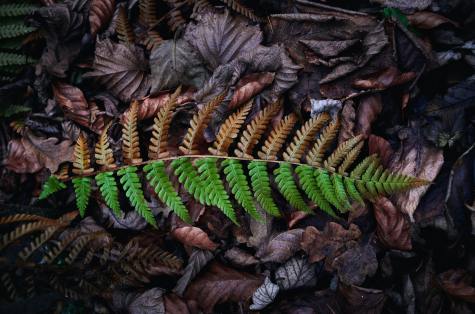
Late Summer – The Mellow Yellow Fifth Season

In the West, we think of the seasons as the quartet of Spring, Summer, Autumn and Winter. And in 2021 we’ve seen the gamut of what the British summertime has to offer, from extremes of heat to almost ‘Octoberesque’ bluster. Now as the late summer fruits ripen, let us look again at the 24 Solar Terms seen in traditional Chinese life.

According to the 24 Solar Terms, the onset of “Autumn” is placed as early as 7 August although any authentic sign of pumpkin spice latte season is still some way away, given that just over two weeks later we see the day known as “Limit of Heat” when the truly hot summer is said to come to an end. During this time and when the sun is high, there is still warmth. Yet while the sun continues to rise early and set late, the days are shortening almost imperceptibly, and the hint of a chill hangs in the air at the start and end of each day.

Limit of Heat gives way to “White Dew” on 7 September, marking the start of Summer’s transition into Autumn, before we reach the Autumn Equinox on 22 September. It is this broad time frame that Classical Chinese Medicine regards as Late Summer: the betwixt time when we prepare to shift down from the most dynamic and fierce Yang part of the year, into the slower, more introspective quality of the Yin season of Autumn and beyond that, Winter.  

In Classical Chinese Medicine, the organ associated with late summer is the Spleen, with its Yang partner being the Stomach. The Spleen controls the integrity of our blood vessels and is connected to the exterior of our bodies via the mouth and lips. It is also associated with the emotion of worry. The role of the Spleen is a crucial one, as it controls the production of Qi that has first been harvested and then transformed from food processed by the Stomach.

Qi is the name given in Chinese medicine to all the energies that power change throughout the body and, indeed, the Universe. Qi is the vital life force energy needed for all living processes to take place; where we humans are concerned, our Qi comes in different forms.

Starting with original Qi, our “Yuan Qi” is the single dose we inherit from the genes of our folks and it resides in our Kidneys. The rest of the Qi we need during our lifetimes must be produced from the food and drink we consume (“Gu Qi”), and from the air we breathe (“Kong Qi”).

So it is to the Spleen that we look to see where Gu Qi is made. This organ is then responsible for moving the Gu Qi upwards towards the Lung where it is then combined with Kong Qi to produce “Zong Qi”. Not only does Zong Qi warm and nourish the Heart and Lungs so these organs can perform their own functions of keeping our bodies healthy through the wider circulation of Qi and Blood, but Zong Qi undergoes a further and final transformation into Meridian Qi, or “Zhen Qi”.

Zhen Qi is the Qi which, ultimately, is carried by our blood to the 12 invisible energetic pathways within our bodies; known as our major meridians. It exists itself in two specific forms: “Ying Qi” (Nutritive Qi) and “Wei Qi” (Defensive Qi).

Ying Qi is the energetic substance that sits within our meridians and so is activated by Tui Na massage or the acupuncturist’s needle. Ying Qi spends two hours every day in each meridian, performing a deeply nourishing function. For the Stomach, those hours fall between 7am and 9am while for the Spleen, it is between 9am and 11am.

Wei Qi on the other hand moves both in and outside our meridians. Tending to reside within the superficial muscular layers and skin during daytime hours, its role is to protect us from invasion by pathogens and infection. It then retreats to the interior of our bodies during night hours, and so it follows in traditional Chinese medicine that this is the time we are believed to be at our most vulnerable. How many of us have gone to bed feeling well, only to discover on waking that a viral overlord has somehow managed to launch an overnight stealth attack, filling our poor unsuspecting bodies with lurgy?

Late Summer’s colour is yellow and its element is Earth. Its climatic condition is damp. Stagnant and oozy, dampness is perfect for breeding many of the ills we encounter within both our environment, and ourselves. At this time of the year, the air has a quality of stillness and humidity can be high, so the pores of our skin are open. During this time of change and adjustment, our focus should be on the harvest of all that has come to fruition, both within and without. A sense of heaviness and of slowing down is all around us in nature. Boughs groan under the weight of the Earth’s ripened bounty, so we gather the abundance now for valuable sustenance in leaner times to come.

For us, it is time to nurture ourselves after the high energy of the earlier summer season. It is time to begin preparing for the changes in the Yin seasons to come by devoting our energy to self-care and striving for balance, through centring, grounding, and stabilising. Not too much and not too little. Our focus should be on our digestive and immune system health, and in doing so we give ourselves the best chance of thriving through the scarce Autumn and Winter seasons ahead.

When Spleen and Stomach energies are strong, our digestion is healthy and regular. We are imbued with energy, with robust immune systems primed to fight off the kinds of seasonal ailments that thrive in damp conditions. Our skin is clear and bright; blood is nourished; our muscles are strong and well-defined.

But when Spleen and Stomach energies are weak and imbalanced, we risk oedema, bruising, varicose veins, along with a tendency to carry excess weight. We suffer from aches and our muscles are poorly defined. We feel physically and mentally lethargic. A fog descends. We suffer from abdominal pain, bloating and spasm, along with gastro-intestinal problems. Excessive worrying and over-analysis, anxiety, obsessive thoughts and behaviours, as well as an inability to concentrate and make creative decisions, are all symptomatic of Spleen and Stomach imbalance.

We are invited during late Summer to embrace gentler forms of exercise, such as walking, swimming, Tai Chi, and restorative Yin Yoga. In essence, that which encourages reflection and introspection over higher intensity workouts where heavy muscle use depletes the Spleen and Stomach energies.

Unlike the foods we’re encouraged to eat during the high Summer season, our focus now should be on warming foods that are cooked. Root vegetables that reflect the earthy, grounding colours of the season: sweet potato, carrots, squashes, pumpkins and beetroot. Oats and Rice, as well as soups and stews using warming spices such as cinnamon, coriander, cloves, fennel, turmeric and cumin.

To discourage internal dampness, avoid raw foods, as well as chilled and iced food and drink. Also abstain from sugar and refined, processed foods, as well as greasy food.

Massage & acupuncture at SP21 & BL20 (aching muscles, fibromyalgia, abdominal bloating), BL21 & ST36 (boosting immune system, bloating & diarrhoea)

Featured

2021 – The Yin Year of the Metal Ox

What a year that was! 1 January 2021 wasn’t the only New Year corner to be turned. On Friday 12 February 2021, the Chinese Lunar New Year is celebrated where we transition from 2020’s year of the Water Rat to the Year of the Metal Ox.

Rats are sociable creatures; fearful of loneliness. The energy of the 2020 Water Rat year was Yang: fast-flowing and quickly evolving with change being wrought upon us in the blink of an eye, rather like a flash flood.

According to Chinese Mythology, the creation of the Zodiac and the order of its twelve animal members was decreed by the Jade Emperor to hinge on the outcome of a Great Race. Ox, with its immense strength, resilience and steadfast propensity for toil was considered the favourite to win. He was expected to take his place as the first Zodiac animal, particularly as the race entailed the crossing of a river. But Rat, ever resourceful in the face of adversity and dwindling odds, was granted passage on Ox’s back, climbing aboard on the promise of a song. And so together they set off, crossed the river and ran the race, with Ox giving of his energy and his stamina. But right at the race’s end Rat leapt forward from Ox’s back and crossed the finish line first.

Thus, Ox is the second animal in the Chinese Zodiac.

In China the Ox is associated with fertility and harvest. Abundance and prosperity. In other cultures we see a recurring theme of stability, along with nurturing and sacrifice where oxen are concerned. For the Native Indians and Celts nothing of the ox went to waste. With an innate understanding of the delicate balance of life, both cultures held a deep reverence for the symbiotic relationship between Man and Nature, her bounty, and the creatures that played their part in providing it. Every part of the animal was used to provide for the people. Ox and its female bovine counterpart, the cow, provided clothing for warmth, vessels for drinking, labour for toiling, as well as food and nourishment through the steady and constant supply of milk.

Ayurveda, one of the world’s oldest systems of medicine which, along with Classical Chinese Medicine, is predicated on the belief that health and wellness depends on balance of mind, body and spirit, regards cow’s milk and other dairy products as almost sacred.

Cow’s milk is believed to balance the doshas – vata, pitta and kapha – the trinity of subtle energies that flow through our bodies. It nourishes our cells, tissues and organs, as well as balancing our emotions. Milk is believed to build ‘ojas’, the body’s subtle energy force. Strong ojas equals healthy sleep, iron immunity, happiness and stability…in essence, a body in its optimum state and brimming over with vitality.

The Vedas, the oldest texts in Hinduism, say that milk is like ambrosial nectar. Imbued with the essence of all plants, with the cow herself connected to the sun, it is the reason why milk and ghee are said to be golden in hue. There is a misplaced view in the West that Hindus worship cows. In reality the lowly cow is honoured for her selflessness and dependability as a giver rather than a taker; a provider rather than a demander. Water, grain, and grass in return for so much life sustaining yield. In a way the cow is symbolic of all of nature, so in Vedic culture why eat the ox when he plows the field and why eat the cow when her milk has the ability to nourish and sustain entire families year in and year out? According to Our World In Data the energy efficiency of whole milk production stands at 24%, while beef comes in at a woeful 1.9%. If we consider the definition of energy efficiency as the percentage of “calories in” as cattle feed to produce an end animal product – in this case, either milk or beef – the results really are stark.

2021 is a Yin Year and the ox is associated with the Winter season along with the stabilising, grounding element of Earth. Its auspicious hours are between 1am and 3am. In keeping with the Legend of the Great Race, Ox brings the energy of self-reliance, achievement through hard work and toiling away until the goal is reached. Ox is naturally cautious and favours a well-trodden path – it has to be said, sometimes to the point of stubbornness and an unwillingness to embrace change. There is also the occasional explosive “bull temper”. But the energy of Metal in 2021 might itself temper some of that sense of immovability so that the year becomes one where we dare to dream BIG, we get things done and we achieve all that we hope for by channelling Ox’s hard work, grit, and determination.

Featured

Keeping balance in these testing COVID times

In an earlier blog, I touched on the foundations of Classical Chinese medicine being rooted in the philosophy that optimum health and wellbeing depend on harmony and balance in all things. True health is believed to exist when there is equilibrium between the body, the self, and the environment.

Chinese medicine looks for patterns that reveal a rich landscape of insight into all aspects of the patient’s condition. This is distinct from the approach of western medicine, which aims to locate the organic cause of the patient’s symptoms, before moving to diagnosis of a clinical disease.

In Chinese Medicine we see the existence of four branches: Acupuncture, Herbal Medicine, Qi Gong and, finally, Tui Na massage and bodywork. Some might also include a fifth branch; healing through food. Each interdependent branch has its role to play. Each is embedded in the principles of balance and harmony, and each honours the truth that our physical, mental, emotional and spiritual selves are parts of an indivisible whole. Each seeks to extend beyond treating the physical body in isolation. Tui Na, for example, uses a range of techniques to soothe tired, sore, fibrotic and overworked muscles, but also applies targeted pressure to specific points, sometimes called acupressure points, ‘acupoints’ or ‘Qi-points’.

Acupoints are located along the 12 primary meridians – or invisible energetic pathways – that criss-cross the body, through and along which Qi flows. Qi is our Life Force. Qi is the same as the chemical energy we see in western medicine and is responsible for growth, reproduction, repair and our ability to fight disease. But problems with the optimum flow of Qi can lead over time to us being affected physically, mentally, emotionally and spiritually.

In Jonathan Black’s book, ‘The Sacred History’, he alluded to this very thing when describing his first meeting with Lorna Byrne, the celebrated author of the book, ‘Angels in My Hair’:

“I discovered…that one of Lorna’s gifts is that she can see the flow of life force around the body, much as it is conceived in Chinese medicine and which they call chi. She saw a blockage in my energy flow and indicated a part of my abdomen that I should have examined by a doctor. I forgot all about this – as I say, I was busy – until a few months later I began to feel uncomfortable. It turned out I had a hernia and needed an operation.”

With all of this in mind, the aim of Chinese Medicine is to help rid the body of weakness, stagnation, and blockage. In doing so, we eliminate “dis-ease” within ourselves and maintain a state of balance and harmony.

When we think more deeply about balance and what that means, our consideration might expand to embrace the wider concept of Yin and Yang.

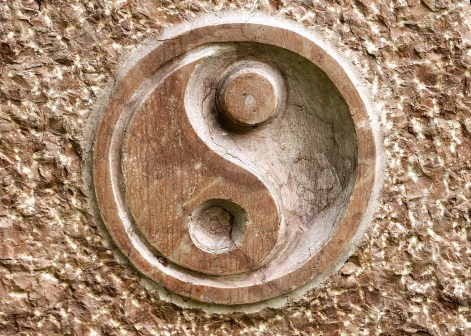
Yin and Yang is a way of describing the principle of duality or opposition that underpins all of creation and how we experience the Universe. Two parts that constitute wholeness. How things within the whole relate to and balance one other, and how nothing can exist entirely on its own. Interdependence once again.

So where we have feminine (Yin), we necessarily have masculine (Yang) as its opposite. Darkness and night (Yin) relative to light and day (Yang); cold (Yin) and hot (Yang); winter (Yin) and summer (Yang). We even see patterns of Yin and Yang within Yin and Yang. Ice would be Yin to the Yang of water, while water would be Yin to the Yang of steam.

Yin and Yang is everywhere, and if we look then we start to see. Yin yoga, Yang yoga. Even the different techniques used in Tui Na massage might be categorised in terms of Yin – gentle, soft and soothing – and Yang – active and dynamic with deep tissue stimulation.

Yin and Yang is fluid and never static. But too much of one or too little of another? Both states of being if left over time can threaten the delicate balance. Balance is key. Balance is everything. And so it follows that the causes of illness in Chinese medicine are broadly distinguished by how the delicate equilibrium between Yin and Yang has become compromised.

Practitioners learn to craft a picture of where the Yin and the Yang balance sits from the subtle signals their patients present to them: the sounds they make – including their pulse – and the way they make them, the way they look and smell, the colour of their skin and tongue. Practitioners’ skills become finessed as further patterns are observed, again, within the Yin and the Yang of: interior and exterior, deficiency and excess, as well as hot and cold.

With interior, we think in terms of chronic conditions, likely to have developed over time and on an emotional level, under the radar of the individual’s conscious awareness. How many of us ‘keep calm and carry on’ day by day, but all the while at the expense of honouring how we really feel? Sure, we might initially adapt and even feel quite pleased at our ability to absorb life’s curveballs. After all, modern society seems to exalt the ‘doing’ over the ‘being’.

But as I write, we are deep into mid-winter where Seasonal Affective Disorder leaves many of us with little more than fumes in the optimism tank as it is, without factoring in the third lockdown that is now well underway. Liberty – and our ability to do so many things in ways that would nourish our souls – has been necessarily curtailed with no exit strategy in sight. Yet with society as we know it having ground to a halt, our freedoms in shackles, and the majority of our school children being educated at home, many parents and teachers alike find themselves living a paradoxical reality of being called upon to do more than ever before. The same is true for all our front line workers.

Grief is an emotion that has been forced upon many of us over the past year and in Chinese medicine, the organ associated with the emotion of grief is the Lung. I recall a lady who, on learning of the association between the two, went on to reflect on how her unexpressed grief since the loss of her mother had left her with years of recurrent chest infections.

Worry too, is a constant in many of our lives during the pandemic. Worry for our health and what the future holds; our employment, our finances and what the future holds. Worry is associated with the Spleen in Chinese medicine, the Yin organ whose Yang partner is the Stomach. Is it any surprise then that worry often interferes with our digestion?

In these testing COVID times, it is doubly important that we allow ourselves the time and the space to express how we feel. To ourselves and to each other.

By contrast, exterior conditions might be considered more in terms of sudden, acute, pathogenic disease invading the body from the outside environment – COVID-19 being the obvious example.

If an individual’s Bodily Substances – for example, their Blood and Qi – are lacking, or the Yin Yang balance within their organs is underactive, this might be thought of as deficiency. We think in terms of lethargy, weakness, fatigue, disturbed sleep, dry skin and hair, pallor, and a tendency to feel the cold as some indicators.

Excess on the other hand, could manifest as bodily aches and pains, abdominal bloat, chest pains, heavy breathing, a loud and shouty voice, even emotional outbursts such as anger. After all, it is the Liver that is associated with the emotion of anger, and which houses the Blood. According to Chinese medicine, Blood collects in our Liver while we sleep, with the Liver’s optimum time within the 24-hour cycle of the 12 Primary Meridians lying between 1am and 3am.  

Where hot and cold patterns of imbalance are concerned, Chinese Medicine views heat in terms of either: actual excess Yang function within the body that’s usually acute in nature (think heat, thirst, fever, sore throat) or a lack of Yin in the delicate balance that creates the false appearance of too much Yang. This tends to be chronic, associated with hot flushes and night sweats in the absence of fever, constipation, dry skin, mouth and lips along with insomnia.

Meanwhile, cold is regarded as either: deficient Yang – again, chronic in nature – creating the illusion of Yin excess (a feeling of coldness and wanting to sleep excessively, no thirst but with a preference for warm drinks, tiredness, paleness, oedema) or an actual excess of Yin, which is acute, and typically associated with coldness, aches, stiff joints and sharp stomach pain. 
The differences appear to be subtle, but they are distinct. And there exists yet a further and final elusive level in the practice of Classical Chinese medicine. It is where the lofty heights of the “Penetrating Divine Illumination” might be reached after a lifetime of dedicated practice. It cannot be taught and as Ted K. Kaptchuk, Professor of Medicine at Harvard Medical School, describes in his book, ‘The Web That Has No Weaver’,

“The Penetrating Divine Illumination starts as an assessment and instantaneously becomes intervention. The Penetrating Divine Illumination is the magic of soul meeting soul, Spirit reflecting Spirit…

…The Penetrating Divine Illumination is the highest form of the Yin and Yang of healing. I used to watch it when I worked with my first teacher. Just from being and talking with Dr. Hong, most patients encountered within themselves a depth of humanity deeper than the difficulty or tragedy of any illness. Authenticity and integrity were experienced. The Qi shifted. The Spirit was touched. No matter how broken or isolated a person before the appointment, a meeting with Dr. Hong was an opportunity for both an expression and a recognition of his or her most genuine humanity.”

Such a beautiful description evokes wafts of Master Shifu level skill. And while an acupuncture or Tui Na treatment, or perhaps even a Qi Gong session might not be so transcendental, each is undoubtedly an exercise in keeping balance. Foreign holidays could well be off the cards in 2021 and so, even after strict lockdown restrictions eventually lift, it might be apposite for us to look into alternative ways to achieve our much needed R&R.

Time spent getting a massage, as the saying goes, is never time wasted. Even more so, if the outcome of a recent experiment seen in the BBC’s broadcast – ‘The Truth About Boosting Your Immune System’ – is anything to go by; 60 minutes of massage saw a 20% increase in the recipient’s lymphocyte T-cell count. In today’s testing COVID times, that’s not to be sniffed at. With Tui Na massage also able to keep our Qi flowing freely, our wellbeing balanced, and our muscles knot-free zones, what better way is there to contribute towards honouring ourselves not just in body, but in mind, in soul and in spirit?

Healing – Walking the Talk

The path to wellness is neither linear nor passive. When we set out for our destination, our feet must move one in front of the other to get us there. We don’t just think or dream our destination into being before finding ourselves arrived.

It’s the same for healing. Healing from past hurts and trauma, howsoever caused. Much as we’d like it to, healing doesn’t just happen to us.

Freedom from harmful ways of living, being and coping. Restoring the true balance and wellness that each of us deserve as our birth right, so we live life on an even keel rather than lurching from one chaotic landscape into another. All of this requires commitment, dedication, and perseverance.

We might go so far – perhaps much further than we dared imagine was possible. But then we need to stop a while. Pause for a rest. Take in our surroundings. Assimilate all we’ve seen and felt. We might dwell in that place for some time because we’re knackered with the sheer effort of it all. We wait until our energy reserves are restored.

Then we encounter the road block and feel like we can’t go any further. That it was a bad idea after all. Everything hurts. It’s dark and there’s no light up ahead to guide us. We’re cold and exposed and we yearn instead for the familiarity of what we’ve always known. Even though deep down, that little voice keeps reminding us that we’ve stuck it out there way too long and it’s doing us no good.

That’s when, more than ever, we need an iron will to keep moving forward, since we’re all dab hands at talking ourselves out of stuff…

Not today, I’ll do it tomorrow instead.

Or looking for paths of least resistance…

I’ll wait for the bus. I mean, it’d be easier if I just sit and be carried there.

But the buses aren’t running today!

Never mind, I’ll just stay where I am then.

Really? Even though the rewards will be rich when you get there?

It’s okay, I’m happy to wait.

Even though all this waiting means you’re still hurting yourself.

I’m just so tired and it all seems like even more hard work; I don’t deserve to wake up to a beautiful horizon anyway…

If we wait passively for change to happen, all will remain the same. As the saying goes, it’s put up or shut up. And in the words of the 13th century poet, Rumi:

“One of the marvels of the world

is the sight of a soul sitting in prison

with the key in its hand.

Covered with dust,

With a cleansing waterfall an inch away…”

It takes courage to overcome fear and step into the unknown. But if we can find a way to keep moving forward one step at a time, we’ll eventually walk the path back to wellness. It won’t be easy. True healing is painful, ugly, raw. It needs time and patience, along with faith that will often feel like it’s blind.

And the path can’t be bypassed by counting on the ministrations of those who claim to be able to heal or fix us. Aside from burning a sizeable hole in our pockets, as time goes on we risk creating toxic co-dependencies. Our healers or gurus become crutches we can scarce live without. We feel yet more detached from ourselves and our ability to recognise the moves we must make to truly serve our best interests. We have to do the work for ourselves and perhaps hardest of all? Be prepared to truly confront our own maladaptive behaviours and the parts we play in maintaining our open wounds.

I know it can be done. I’ve seen it achieved by others and have walked the path for myself. More than once, as the path is by no means at an end. But what I also know to be true is that once we’re on it, we are each of us walking towards being able to stand in our own strength. And the difference? We’ll be reassured in the knowing that struggle and adversity – woven as they are into the tapestry of all our lives – will from time to time rise up to challenge us. But the thought of those eventualities won’t strangle us before they’ve even come to pass because we’ll have acquired the tools to cope.

Is it your time to begin walking towards your beautiful new horizon?

2022 – The Yang Year of the Water Tiger

Kung hei fat choy!!

1 February is when 2022’s Chinese Lunar New Year is celebrated, marking the end of Winter and the long-awaited beginning of Spring. I’m especially excited as we’re moving from the Yin Year of the Metal Ox to the Yang Year of the Water Tiger. Not quite the Wood Tiger year of my birth – I’ll have to wait ‘til I’m 60 for that one to come back round – but I’m confident this year promises to be a special one.

The energy of the 2021 Metal Ox resonated with stability, steadfastness, and toil. Dreaming big, overcoming obstacles and grafting hard towards our goals. This year, we bound ahead into great adventure, being prepared to ring the changes, and take risks we perhaps would or could not have contemplated before. Excitement abounds as we leap forwards towards achieving our wildest dreams; for many, the landscape of our lives will look completely different by the time the year draws to a close once more.   

According to Chinese Mythology, the creation of the Zodiac and the order of its twelve animal members was decreed by the outcome of the Great Heavenly Gate Race. Tiger, fast, competitive, and proud, was dismayed to find the final stage of the race – the crossing of a great river – exhausting on account of its strong currents. He took bronze position in the race, behind Ox, and wily Rat but ahead of Rabbit, who managed to float across on a passing log once his supply of steppingstones had dried up; so avoiding the need to get his fur wet.

In the Far East, the Tiger is associated with power, ferocity, courage, and strength. To the Chinese, Tiger, rather than Lion, is the King of the Beasts. The Chinese character that translates to the western meaning of ‘King’ resembles closely the typical markings seen on a Tiger’s forehead.

Tiger is woven into Chinese culture and its attributes are revered – the highest-ranking Imperial army generals were referred to as Tiger Generals. Similarly, the 16th century Japanese feudal Lord, Takeda Shingen, was sometimes referred to as the “Tiger of Kai” on account of his legendary combat prowess. Indeed, even though Tigers have never been indigenous to Japan, it has continued to honour this animal by including it in its own Zodiac and New Year celebrations. In both cultures Tiger is regarded as the protector of good men, and the dead. It is believed that Tiger has the power to ward off evil.

On its own, Tiger is a Yin animal and considered ruler of the Earth, while the Dragon is Yang and regarded as ruler of the Heavens. Thus, both Chinese and Japanese cultures often depict these creatures together, as the perfect embodiment of Yin and Yang.

With Tigers calling forth the wind, and Dragons bringing the clouds, together they are custodians of the delicate balance between wind and water in nature so peace can prevail.  And according to Chinese folklore, no less than five tigers hold the balance and maintain the order of all universal cosmic forces: the white, black, blue, yellow, and red Tigers.

Tiger is also the national animal of Bangladesh and India. It is associated with the Hindu deities, Shiva and his consort, Shakti, who – in her manifestation as Durga, protective mother of the universe – is revered for her power, strength and protective energies. Durga would battle the forces of evil, slaying demons and defeating darkness, while riding on the back of…why, Tiger, of course!

Ayurveda, one of the world’s oldest systems of medicine is, along with Classical Chinese Medicine, predicated on the belief that health and wellness depend on balance of mind, body and spirit. Pitta – the perfect mix of fire and water – is one of the Doshas, the trinity of subtle energies that flow through our bodies. Relating to the digestion of food, as well as thoughts, emotions and experiences, Pitta is characterised by its heat and intensity; once again it is associated with Tiger.

Tiger resonates too with the Spring season, together with the expansive and flexible element of Wood. The energy of tiger is competitive and ambitious, yet with a deep-seated sense of compassion and a desire to achieve the right outcome and help others.

2022 is the year to take risks and to turn our dreams into reality. If you were born in the Year of the Dragon, the Horse, or the Pig (the Chinese zodiac animals regarded as most compatible with Tiger) yours is said to be an especially lucky 2022. Of all the elements, Wood is the one that grows. So when combined with the additional Yang of Water – the strongest element – we see the potential for breakthrough, exponential growth and resounding success in all our endeavours. Unlike the steadiness of last year’s Year of the Metal Ox, the year of the Water Tiger will be dynamic, and courageous, driven by raw emotion and power.

If all that powerhouse force-of-nature-energy can be harnessed and channelled effectively, great achievements can be made. Obstacles can be overcome with tenacity, even for those born in Tiger years, as one’s own zodiac sign year is traditionally viewed to be unlucky. But beware the potential quickness to temper and rash impulse of the Tiger energy, which can lead to conflict. The course of our lives can also turn on a sixpence this year. So while we should allow our intuition to guide us, we must be wary of the ego’s capacity to deceive and mislead us into crashing headlong into chaos and being burned.

“Life is a tiger you have to grab by the tail, and if you don’t know the nature of the beast it will eat you up.” – Stephen King, ‘Different Seasons’

Perhaps Water’s calm and reflective side might succeed in tempering some of that explosive, fierce intensity so that goals centred on justice and empowerment can be achieved for the greater good of all.

Autumn – The Season of Letting Go

Autumn; the start of the yin cycle.

It coincides with the time of year my Reiki attunements happened to take place. My children were much smaller then. As the years have passed by since, I have mourned and then learned, in time, to let go of the loss of their smallness: memories of their squeaky little voices and sticky little hands; their velcro-fastening shoes because their fingers had yet to develop the dexterity to tie their own shoelaces. I feel the nostalgic echo of those times each Autumn. When the colours of the season – the golds, the earthy oranges, the bronzes, the browns, and the reds – all seemed to transform into a magical UHD kaleidoscope to my eyes.

Autumn is the season of metal: of endings and conclusions and nostalgia. The climatic condition is dryness. It is the time to tie up the loose, straggly ends ready for the new beginnings that will always follow. It is the time when the leaves fall to decay into the ground and in so doing, lay the conditions for the new growth that will follow in Spring. For now we are prompted to turn our attention inwards. Introversion and introspection. But for some, the shift from late summer into Autumn catches us unawares, particularly where we have continued to power on with our activities, determined to cling to and eke out every last drop of summer’s high energy vibration.

Lung (yin) paired with the Large Intestine (yang) are the organs in Traditional Chinese Medicine associated with Autumn. The Lung is the uppermost ‘canopy’ organ and is responsible for the production of ‘Kong Qi’ from the air we breathe. It controls the function of our ‘Wei Qi’ (defensive Qi) along with the dispersal of bodily fluids. The Lung is connected to the exterior of our bodies through the nose – that gateway for external pathogens to enter and replicate. So it is in our interests to maintain strong Lung Qi and function.

Lung resonates with the emotion of grief and of letting go: the appropriate and healthy expression of loss and release when things come to an end. But also elimination of that which no longer serves us…the very function performed by the Large Intestine.

Think about the effect on our minds, bodies, souls and spirits when our grief is left unexpressed. Think of the deleterious effect of holding onto that which no longer serves us: negative self opinions, destructive habits, toxic relationships, baggage from the past that continues to haunt us and clutter our minds, as well as our living spaces. Think about the effect on our bodies if our waste is not removed, its passage impeded by sluggishness, or worse still, blockage.

In the season of Autumn, we are to breathe in the cool air and inhale the purity. Focus on our breath with deep, measured breathing – yogic box breathing to strengthen our lungs and help foster clarity. Retreat and reflect. Sleep and conserve energy to restore our metal element and build up our immunity for the Winter season ahead. Favour warming foods: soups and stews, along with ginger and horseradish. Stewed fruits, such as pears, apples and plums. Eat broccoli and beetroot.

Massage LU3, LU7, LU9, LI4

At the height – and joyful heart – of Summer

21 June 2021 and the Summer Solstice, traditionally known as mid-summer, has landed!

After a UK May of rain, hail, more rain, slugs and snails, and unseasonably cold temperatures, the first three weeks of June gave us a vintage heat that really did live up to the title of Sir Frederic Leighton’s painting. Summer seemingly burst forth from nowhere. Suddenly, life became a kaleidoscope of colour. All that rain, followed by life giving sunlight and warmth gifted us a resplendent bounty of impossibly tall wildflowers. It was as if they were intent on making up for lost time, making the most of every daylight moment to reach the pinnacle of their potential. It really was a joy to be outside and immersed in nature: to feel her palpable energy and almost see growth taking place all around us.

Of course, in the style that is so typical of the British weather, the rain – carrying with her a return to much cooler temperatures – has for the time being returned to mark the longest day of the year. But surely it won’t be too long before the prodigal sun stages a glorious comeback.

In Ancient China, the sun’s position in the zodiac was how the “24 Solar Terms” came to be. As traditionally agricultural people, the Chinese found that sub-dividing the seasons of Spring, Summer, Autumn and Winter into 24 Solar Terms enabled them to best align their farming activities and lifestyles with the subtle climactic changes that occurred as one season would wax and wane into the next.  

According to the 24 Solar Terms, the start of Summer occurs in Southern China on 5 May. Two further terms – “Small Full” when grain seeds begin to plump but are yet to ripen, and “Grain in Ear” when wheat ripens and Summer planting commences – pass before the Summer Solstice is reached. Beyond that, we have “Minor Heat” on 6 July, followed by “Major Heat” on 22 July, when sunshine peaks in terms of duration and temperature. And so we see that wondrous pattern once more; Summer is the most Yang time of the year.

Summer’s climatic condition is heat. Thus, its corresponding element is Fire and the colour is red. In Classical Chinese Medicine, the Yin organ associated with summer is the Heart, with its Yang partner the Small Intestine. The Heart, as a Yin organ, is characterised by the energy of ascension. It pumps and circulates blood around the body and in Chinese Medicine is also responsible for regulating the blood, as well as our Qi. The Heart is connected to the exterior of our bodies via the Tongue and our complexions reflect the quality of our Heart function. The Heart also houses our ‘Shen’ or spirit and is associated with the emotion of joy.

Summer is a time of growth, of exuberance, and playfulness. With all the extra daylight and warmth, we find ourselves naturally rising earlier. Powered by the sun and imbued with seemingly limitless energy, we might be motivated to strive for the peak of our capabilities. But we must beware burnout. Balance in all things is key even during the intensity and potency of summertime, for what we do now can either fortify or deplete us ahead of the coming Yin seasons of autumn and winter.

Uncontrolled excess fire energy can leave us feeling like our burners are still blazing late into the night, resulting in insomnia, and a fried central nervous system. Our spiritual wellbeing also suffers where our experience of joy is overlaid with mania. Think overheated, loud and over the top. Conversely, a deficient fire energy can manifest as an inability to experience joy, perhaps low mood, and even depression.

If our fire energy is balanced, we experience a life that is calm not only in spirit, but also in body. Our hearts beat steadily and strong in optimum health. We are well hydrated, our skin glows and our tongues and mouths are free from ulcers. We speak clearly and are not tongue tied. Our eyes are bright and moist, not red and dry. Likewise for our digestive systems, where we are free from nausea, stomach pain, constipation, and gastrointestinal disorders.

When we consider the Heart’s Yang partner, the Small Intestine, we see how its role in Chinese Medicine comes into play. The Small Intestine indeed extracts what we need for health and vitality, then eliminates that which serves no beneficial purpose. But the Western perspective of merely digesting food and fluid is transcended, as the Small Intestine relates also to the processing and letting go of negative experience, attachments and emotions through healthy discernment and sound judgement that is not clouded by mental imbalance.

Given Summer’s essence of expansion and light, it is perhaps unsurprising to learn that the fire element is unique in that it has two additional meridians: the Yin Pericardium and its Yang partner, the San Jiao; sometimes referred to as the Triple Burner. The Pericardium is recognised in Western Medicine as the membrane that encloses the heart organ. In Chinese Medicine it is similarly regarded as performing a protective function – again, not just physically, but spiritually and emotionally. The San Jiao, however, has no Western counterpart. It is best described as the hollow cavity within the body’s trunk, divided into three: upper (concerned with respiration and from where fluids are dispersed to all parts of the body), middle (concerned with the stomach, where food and drink is digested and then transported), and lower (concerned with the removal of impurities and where waste is moved to be eliminated).    

So we are invited during summer to rise early and retire later; living our lives in playful tandem with the expansive energy of the sun. To reinvigorate and replenish the reserves that were depleted during the cold dark Yin season of Winter. We are encouraged to devote our increased time and energy to ripening our creative endeavours, but all the while to keep a watchful eye that we don’t tip into burnout. Walking barefoot in the grass, swimming in cooling water, practising yoga to keep the heart open. Partaking in pastimes that make our hearts sing, and that bring joy and happiness not just to ourselves but to others. Expressing gratitude for life’s many gifts.

Eat bitter, cooling, moistening foods – fresh and raw produce, particularly salads and green foods with a higher water content: think watercress, spinach, cucumber, mint, watermelon and strawberries. Consume fish and seafood. Avoid hot, spicy and drying foods, as well as eating to excess. Drink more water to stay adequately hydrated.

Massage & acupuncture at H8, P3, LI11

Spring – time to rise up

The first signs of Spring are finally here! And not a moment too soon. These past few months with its repeated cycles of tiers, restrictions, and lockdowns have for many of us been brutal. Our coping mechanisms during the first lockdown were at least shored up by the sunshine, the warmth, and the longer daylight hours of 2020’s Spring and Summer seasons. During this last Winter the outlook for our mental and physical wellbeing felt, at times, nothing but bleak. 

But as we bear witness once more to the rising Yang of Spring bringing forth new life and new growth, we also begin to feel that energetic shift within ourselves. With renewed energy comes renewed hope. Two Yin seasons of Autumn – with her endings and conclusions – and Winter – with her rest and recuperation – are now behind us, and there is something deeply reassuring to be found in Spring’s testament: no matter what hardships we have faced within and without, the cycle of nature always reminds us that nothing ever stays the same. 

For the Chinese, the Lunar New Year in February marks the onset of Spring – a good month before the Spring Equinox in the West. Spring is associated with the element of Wood; the first element and considered to be ‘young’ Yang. Our bodies are regarded in Chinese Medicine as a microcosm of the universe’s macrocosm, and we see that the organ associated with Spring and Wood is the Liver.

Liver is a Yin organ, with its Yang partner being the Gallbladder. Its energetic, Jue Yin partner, is the Pericardium.  As is the way with all the body’s Primary Yin meridians the energy ascends, rising from the earth. Liver’s ascending energy, its Qi, is analogous with the seeds in the earth and the huge amounts of energy they expend to germinate and then force themselves up through the still hard and cold ground. With all that raw energy flying around it’s no surprise that the enhanced nutritional benefits of consuming sprouted seeds have been well documented.

Liver also houses the blood (and, it is believed, the soul). It performs a vital role along with the Gallbladder, in ensuring the free flow of Qi throughout our bodies, as well as the other fundamental substances that nourish, feed, and moisten, including the blood. Accordingly, while its energy ascends it also assists in moving the ascending and descending Qi of all the organs, particularly the Stomach, Spleen and Lung. The Liver opens into the eyes, with Liver blood again ascending upwards to nourish all three eyes – the two eyes with which we see on this plane, and the Third Eye with which we may perceive all that is unseen.

The climatic condition associated with Spring is, of course, Wind. For many of us that shift in energy we feel as the end of one season starts to meld into the beginning of another, can bring with it uncomfortable sensations. Liver’s ascending energy can feel overwhelming and Liver Wind that rises too quickly within us can bring on nausea, dizziness, headaches, tingling in the limbs, as well as spasm, numbness, and even loss of balance. After all, the Liver governs the ligaments, tendons and sinews, the nails and connective tissue.

When Liver Qi is flowing as it should then all seven human emotions – anger, joy, melancholy, grief, anxiety, fear, terror – can be experienced in their proper time and context. Anger, the emotion primarily associated with the Liver, is necessary and has its just time and place in our lives. When appropriately expressed, anger serves as a red flag against injustice, as well as inappropriate and injurious behaviours from others – whether individuals or institutions.

But if anger is allowed to stagnate and is denied a measured and timely outlet, in TCM it eventually becomes Liver Fire that will blaze and blaze unabated. It will burn and rage and be continually stoked. Indeed, if unbalanced, the ascending Liver Qi – which in keeping with Spring is inherently forceful – can rise in excess and be prone to overheating. Within ourselves we can find that we become irritable, frustrated, and too quick to anger. If Liver energy is deficient then fear results in a way that renders the individual unable and unwilling to stand in their strength – to speak up and speak out. Instead they turn away and refuse to look.

“When faced with something exasperating, one should calmly consider which is more important, anger or health.” ~ Cao Tong, Qing Dynasty

In Spring we are invited to embrace activity, particularly the type that lengthens and stretches us so that we can be flexible like the Willow. Think Yoga, Tai Chi and Martial Arts. Tree Pose. Rising early and taking in the morning air with brisk walks. Soak up the energy of new life as it emerges all around us in nature. Listen with joy and a renewed sense of wonder to the vibrant and ever-increasing chatter of the birds as they busy themselves searching for mates and creating new homes.

We are encouraged to express our emotions and our thoughts and to embrace forgiveness; holding grudges damages us from the inside out. We are asked to spring clean within and without. Detoxify ourselves with raw foods; the taste associated with Spring is ‘sour’. Think nettles, mustard greens, wheatgrass, apple cider vinegar, grapefruit, lemon, sorrel and include those magical, nourishing powerhouses – sprouters like alfalfa, mung bean, and cress. Green tea and Matcha. Clear our homes of clutter and detritus so the energy can flow freely and without snagging on anything.

Spring is the time for creativity, inspiration, and planning. It is the time where we can step forward with decisiveness and purposefulness, with no small measure of flexibility and flow in order to breathe life and growth into all that we have manifested.

Massage and acupuncture at LI4 (not during pregnancy); LIV1; LIV3; GB40; GB41

How Traditional Chinese Medicine teaches us to live in harmony with the seasons – Winter

As Autumn draws to a close and we move into Winter, Traditional Chinese Medicine (“TCM”) prompts us to consider how the Yin cycle continues to its peak. 

The leaves have all but gone; the landscape is stripped bare. The light is pallid and a quiet descends, drawing us down into the depths of reflection and introspection. 

Winter is the season associated with the element of water: where we are invited to gaze honestly upon our reflections without yielding to the false narrative of harsh self-judgement; to descend deep beneath the surface and plumb the depths of our inner selves. Do we like all of what we see? What patterns of behaviour, ways of living and being do we hold on to that create imbalance and hold us back? What can we release during this time of quietude to help us seed healthier intentions that will burst forth when the Yin of Winter eventually gives way to the rising Yang of Spring.

The energy of repose during Winter allows for all of nature to restore and rejuvenate. And so too for us comes the time and the space to rest. Surrendering to contemplation and solitude, to recoup what we have expended during the yang seasons of spring and summer that have gone before.  

Kidney (yin) paired with the Bladder (yang) are the organs in TCM associated with Winter and with water. 

Kidney resonates with the emotion of fear: in its healthy expression, fear keeps us on our toes, so we are ready and capable of moving forward through life. Fear is transmuted to courage and willpower with which we overcome adversity and achieve the kinds of things we might otherwise talk ourselves out of being within our reach. But where our fear tips into excess, we are frozen in the icy grip of anxiety, and stagnation prevails. 

And so Winter is the time to nourish the Kidney, as the house where our very essence, our “Jing”, is stored. Think of our Jing – the energetic substance in TCM that enables our growth, reproduction and a healthy, long-lived life – as the candle. Qi – our “Life Force” – is the energetic flame that powers all our life processes, while our “Shen” – our consciousness, spirit and vitality – is the energetic light the candle emits. How we live determines how our Jing is used over our lifetime. Overwork, stress, and excess stimulation – the injurious ways from which we are invited to step away during the season of Winter – will burn the candle from both ends and accelerate the ageing process…

No surprise then, when we also learn that it is the Jing from our Kidneys (along with our Qi) that controls our Shen. And it does so through the heart; the organ in TCM where our Shen resides. For the Heart and the Kidney are also energetically linked as a Shao Yin pair. If the two are in harmony and balance, we enjoy a peaceful spirit. In Western Medicine, we see how the Kidney regulates water metabolism and is inextricably linked to cardiac health: impaired Kidney function can lead to hypertension and, beyond that, the development of heart disease.

In TCM, once the Kidney has extracted the pure parts of the element of Winter – transporting it to our cells to lubricate and nourish for healthy memory, strong bones, healthy libido and flexibility, and to galvanise us towards our goals – the Bladder receives the impure water that is left over. From there, it is to be eliminated as waste, but if the Bladder energy is impaired and imbalanced, we risk fatigue, depression, and struggle with resistance to change.

In the season of Winter, TCM guides us to resist the seduction of over stimulation. Embrace the time for healthy seclusion and rest, rather than seeking the distraction of bright lights and noise as a means of avoiding ourselves. Walk outside and take in the cold winter air, while keeping the lower back and kidneys warm. Savour the silence, and take advantage of the slumberous energy that blankets the world during Winter so the ears can truly listen. The ears are the sensory organ associated with the Kidneys and so a keen sense of hearing is indicative of good Kidney health.

Meditation, reading, keeping a journal. The practice of yoga and QiGong. All are beneficial activities for Winter. Favour food that is cooked low and slow: bone broths, stews and hearty soups, along with steamed greens, whole grains, black beans, kidney beans and roasted nuts. Warming spices – clove, fennel, cinnamon, ginger, star anise – rather than chili spice. Drink warm water to stay hydrated rather than chilled beverages.

Massage: LI4, ST36, SP6, LIV3, DU14, back massage along the Bladder Primary Meridian, K1, K3, K7, K10, K16, K27

#tuina #chinesemassage #tcm #woodtigertherapiesswindon #massagebenefits #complementarytherapies #holistichealth #holistic #wellbeing #acupuncture #tcmwinter

What is Tui Na Anyway?

Tui Na (pronounced “Twee-Nah”), which is gaining popularity in the West, is an ancient system of massage thought to be the world’s oldest form of bodywork. Forming one of the four branches of Traditional Chinese Medicine (TCM), alongside Acupuncture, Qi Gong and Chinese Herbal Medicine, it’s still practised in Chinese hospitals to this day.

In China, Tui Na is used to bring the kind of drug-free therapeutic benefit that in the West would require visits to chiropractors, osteopaths and physiotherapists. That the Chinese Olympic squad receives regular Tui Na sessions for recovery, rehabilitation from injury and to maintain its athletes’ phenomenal performance rate is surely testament to what it can do!

Of course, you don’t need to be an elite athlete to benefit from Tui Na’s powerful effects. Injury, overuse, repetitive movement, poor posture, stress, inactivity and age-related wear and tear all take their toll. From the Powerlifter’s quest to find their One Rep Max; the Couch to 25K’er; the Fran or Murph-bustin’ CrossFitter; the Zoom Yogis; people with age or disability-related mobility issues; heavy manual workers (my partner has worked in the construction industry for 27 years, and swears by his weekly Tui Na); along with those of us who lead largely sedentary lives, amplified all the more by 2020’s COVID-19 flavoured “work from home, stay at home” restrictions…we’re all susceptible to musculoskeletal injuries or pain.

Even anxiety, stress and heightened tension can feed their deleterious effects into our poor muscles, joints and tendons. Joints become stiff and painful. Eventually we become trapped in a self-perpetuating cycle of impaired range of movement, leading to problems in surrounding structures if they’ve had to compensate  for the joint’s compromised function to try to stabilise and protect it from further harm.

Literally translated, Tui (push) Na (grasp) utilises unique techniques such as kneading, palpation, rolling, squeezing, rocking, plucking, vibration, shaking, percussion and rubbing across the muscle fascia. It’s certainly an active experience, characterised by movement and targeted pressure that increases and deepens as the session progresses. Shoes are removed but clothing stays on, as it does with Thai Massage and, generally, the use of oil isn’t necessary.

What can Tui Na do for me?

So while it’s fair to say that Tui Na might not be the bodywork bag of choice for those looking for a more ‘Zen spa’ vibe from their massage – it’s not uncommon to feel some soreness after an initial session – don’t dismiss it out of hand. The rhythmic quality of a Tui Na treatment fosters a sense of deep relaxation. I can attest that during my training, one of our fellow students would drift into a deep slumber during practice sessions; his departure announced by the impressive volume of his snores drifting across the room.

Others report feeling energised and leave with a spring in their step. Because unlike western massage therapies, Tui Na goes even further than treating just the physical body. TCM is founded on the philosophy that optimum health and well being depends on harmony and balance in all things.

Thus, the raft of massage techniques used in Tui Na includes targeted acupressure to specific ‘acupoints’. These are the same points on the body where a practitioner of Chinese Acupuncture would insert needles with the intention of removing blockages that inhibit the free flow of our essential Life Force; our Qi. And there are more than 350 of them! Whether these acupoints are massaged by the Tui Na Therapist or stimulated by the acupuncture needle, the effect is the same; the specific type of Qi – the “Ying Qi” – that sits in our major meridians (the 12 invisible energetic pathways that criss-cross our bodies) is stimulated.

The meridians and their acupoints charted on this model

Clients are often surprised when the Tui Na practitioner works in areas that seem remote from where they feel the source of their physical pain and discomfort originates. But with blockages cleared and our blood, bodily fluids, Qi and other energetic substances able to flow freely to all parts of our bodies, Tui Na is a fantastic treatment to help in the maintenance of our general health, as well as to treat specific physical conditions, including: sports injuries, back, shoulder, knee, hip, and tendon problems. It’s also particularly helpful in the treatment of those troublesome conditions that seem to be so deeply embedded in our modern society: headaches and migraine, stress & anxiety, insomnia and poor sleep, digestive problems and chronic health conditions such as Fibromyalgia and Chronic Fatigue Syndrome.

There might be certain conditions for which Tui Na massage wouldn’t be suitable. People with osteoporosis who are more vulnerable to fractures, or those with new fractures, shouldn’t receive Tui Na, along with those suffering from certain chronic back conditions such as Ankylosing Spondylitis. Equally, people with open wounds and severe eczema should avoid this type of massage. So if you’re intrigued and thinking of giving Tui Na a go, be ready to provide a detailed picture of yourself to the Tui Na therapist, who’s likely to take more than a keen interest in where you are with your state of health and sense of general well being.

If you’re prepared to embrace and commit to just a few sessions of this powerful and unique form of therapeutic massage, you could find yourself becoming hooked!

Tui Na in progress at Wood Tiger Therapies